
What to do if you feel stuck
“I’m stuck.”
If you feel this way, you're not alone. It's one of the most common challenges that I hear from our community.
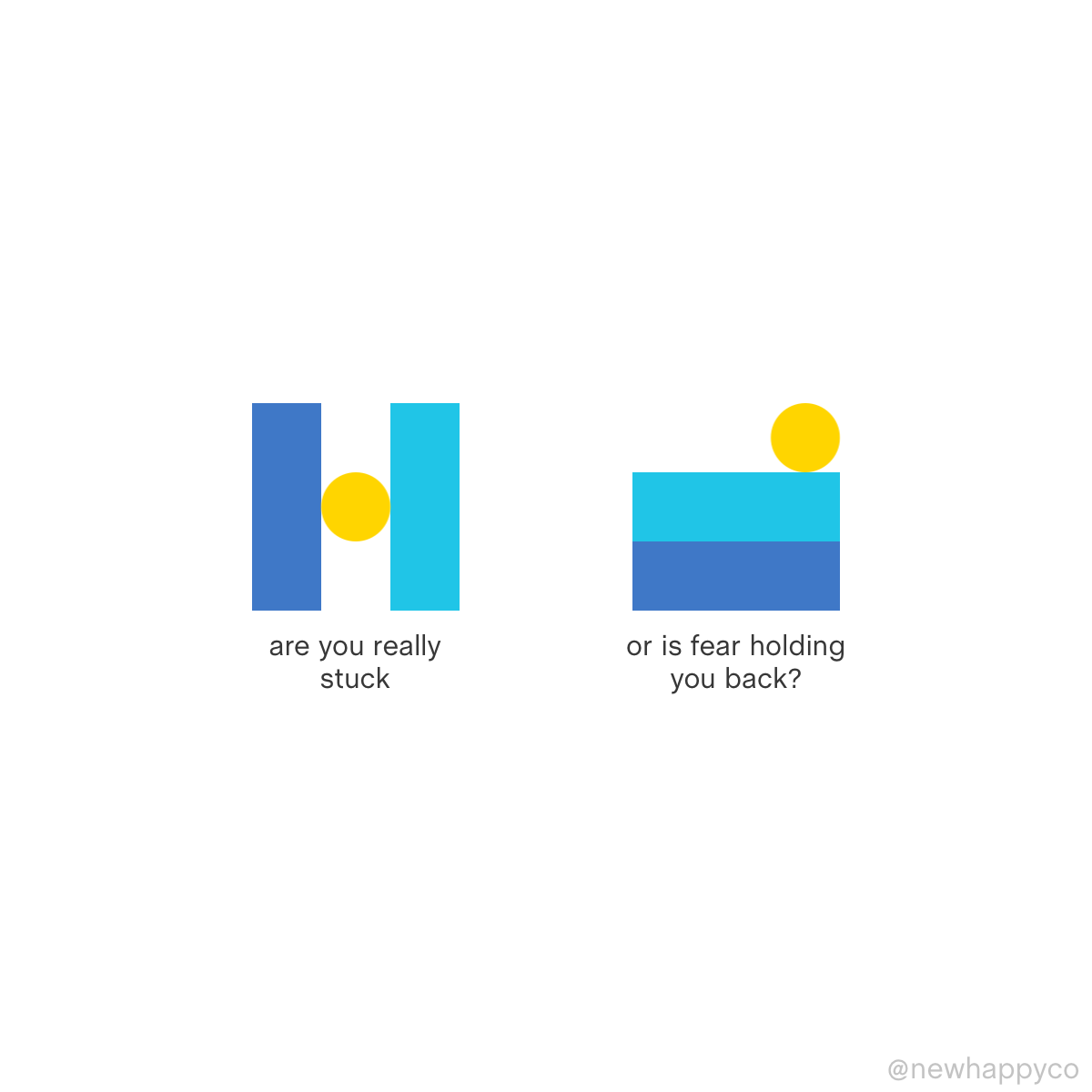
Here's the truth, though. Most of the time, you're not actually stuck. You're afraid.
There’s a part of you that has dreamed up a big, beautiful vision for your life. This part of you knows what you really want and what you're capable of. It wants you to take risks, pursue meaning, and fully experience your life.
Unfortunately, there’s another part of you who finds the idea of pursuing these dreams utterly terrifying.
This scared part of you is asking, "What if I'm not good enough?" and “Will people still love me if I fail?” and “What if I lose everything?”
These two parts have you deadlocked. Your dreaming part is pulling you forward to take a leap, while your scared part is pulling you back from the edge. You’re left yearning and terrified at the same time — unable to move forward, stuck.
Your dreaming part and your scared part are both a part of you. They're not going away, and you wouldn't want them to: both have an important role to play in your life.
That's why getting stuck is completely normal, and something we will all experience multiple times in our lives.
In response, though, we need to learn the skill of getting unstuck. Here are three ways to get started:
1. Ask the question.
The next time you feel stuck, ask yourself: "Am I really stuck, or am I just afraid?" Being honest with yourself can help you start to make changes.
You might be tempted to skip this step, but remember that ignoring difficult emotions just makes them bigger. When you acknowledge the presence of your fear, it'll start to recede.
2. Look at your fears.
Your brain is always worrying about your survival. It easily perceives dreams — like deciding you want to quit your job or pursue a new hobby or move to another country — through this lens. It could be dangerous, so you better stay right where you are, where you're safe!
That's why fears like "What will others think of me?" are so immobilizing: exclusion from your community was, in the past, a very real threats to your survival.
We have to remind ourselves: dreams are not a threat to our safety, but a chance to expand our contributions.
Write down your fears on a piece of paper. Get them out of your head and then look at them from a wiser perspective. Is this realistic? If it did happen, how would you deal with it?
Fears become more manageable when we look at them from a distance.
3. Focus on the task in front of you.
The dreaming part of you can imagine wonderful and adventurous leaps into the unknown.
But these tend to be big leaps, and the bigger the leap is, the more fear it can engender.
Instead, break the leap into smaller tasks. Shift your attention from the big dream to the specific action you can do today.
For example: imagine you want to start your own business this year. This might be way too big of a leap for your scared part. Instead, focus today on brainstorming business names and looking up domains.
This reassures your scared part that you're not doing anything dangerous, but also simultaneously moves you forward in the direction of your dreams.
